#agents
A collection of 7 technical articles about #agents.
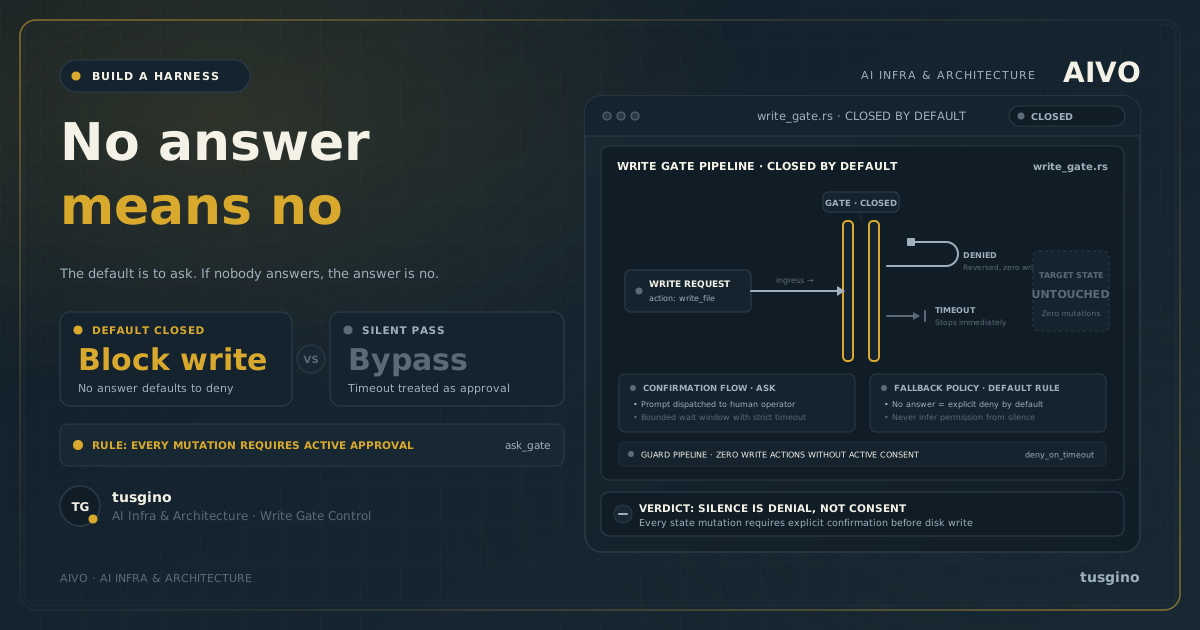
Ask before writing, and refuse when nobody answers
Permission is not a true/false flag. It is a seam with a contract, three sandbox modes that speak only about files, and a safe default: no answer means no.
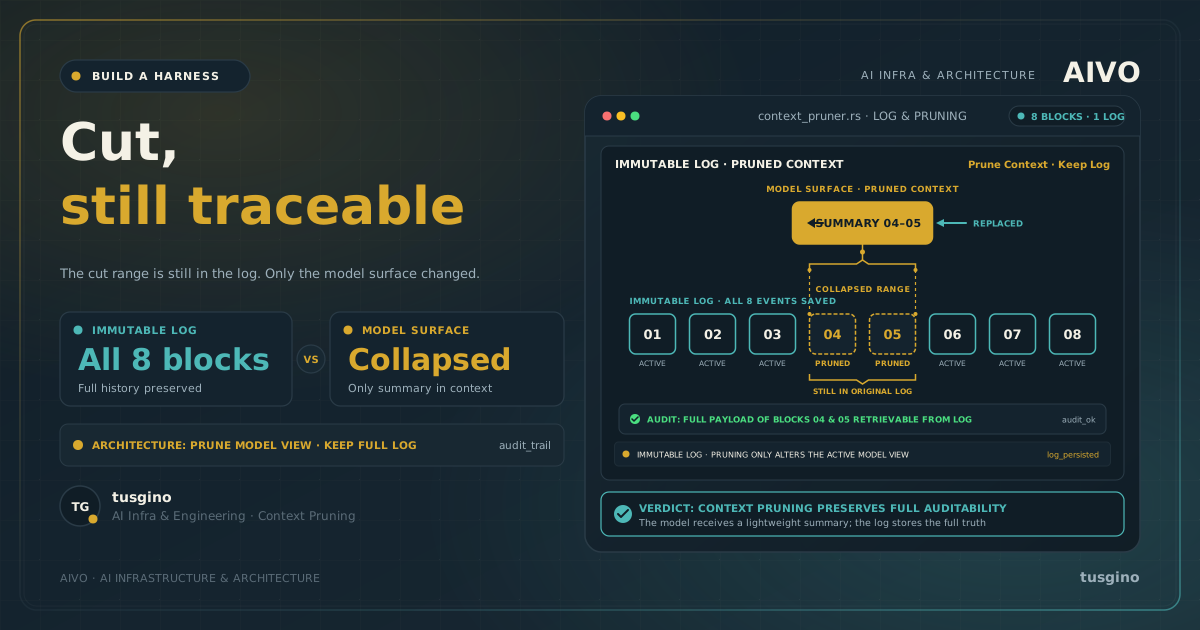
Cut the context, keep the audit trail
Compaction deletes nothing. It only shadows a range on the surface sent to the model, records exactly which range, and leaves the original in the log for later.
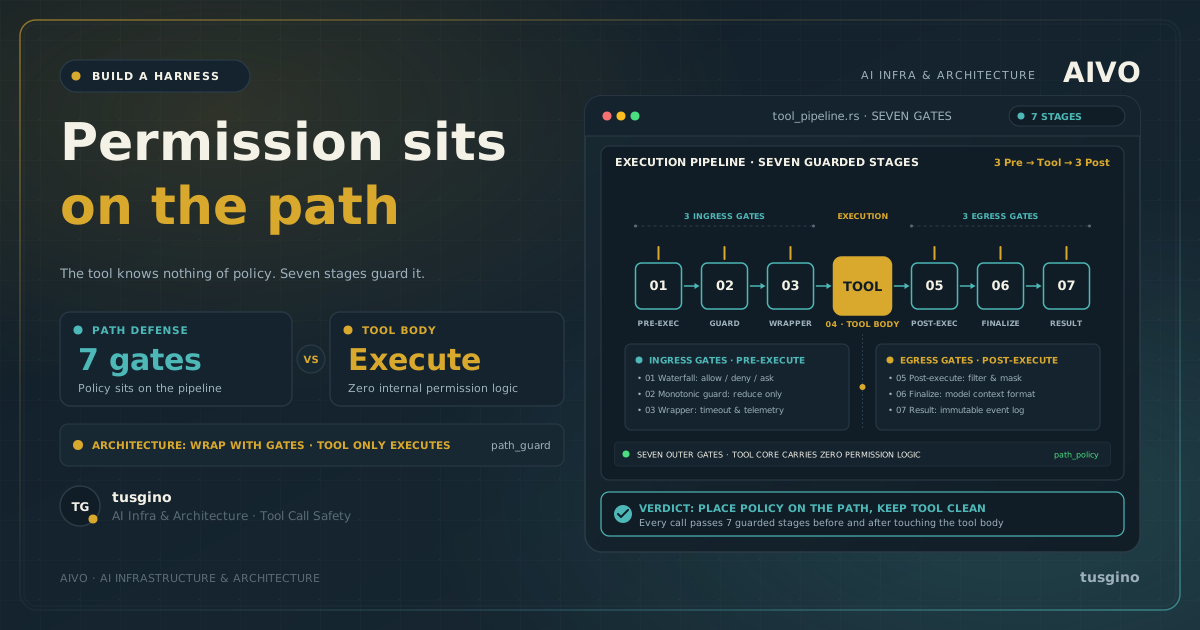
Permission sits on the path, not in the tool
A tool call passes seven stages before it reaches the tool body. Policy, hooks and sandboxing live there — and the tool itself need not know about them.
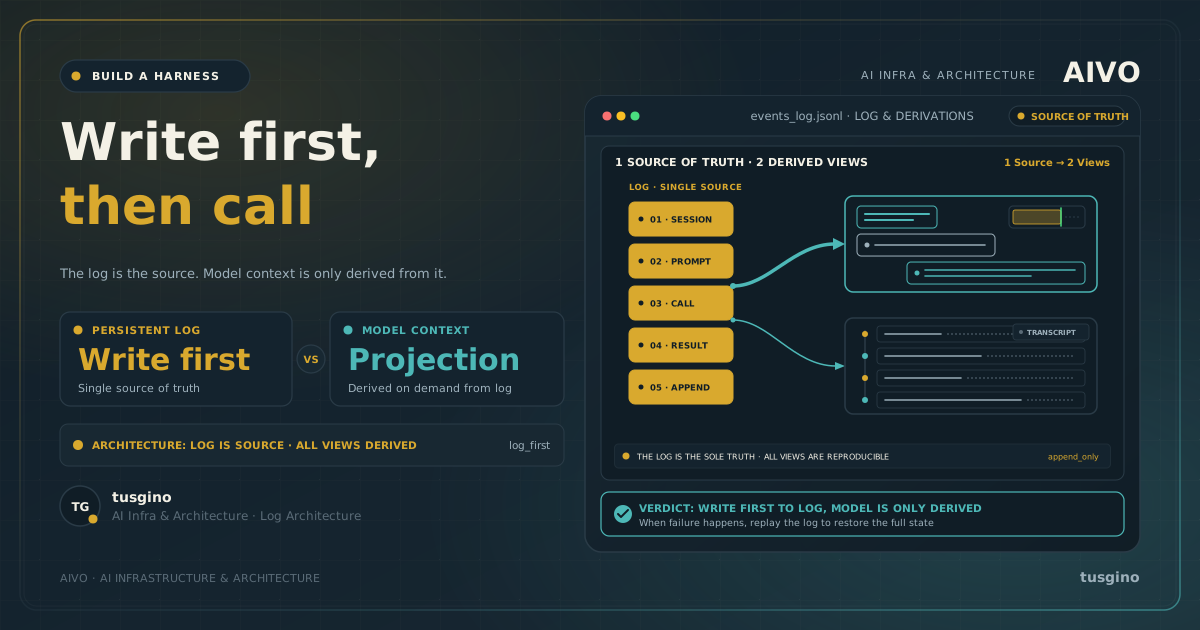
The log is the source, not a copy
Everything the model sees must be in the log first. Context is never stored beside it — it is derived, and that is the difference between a source and a copy.
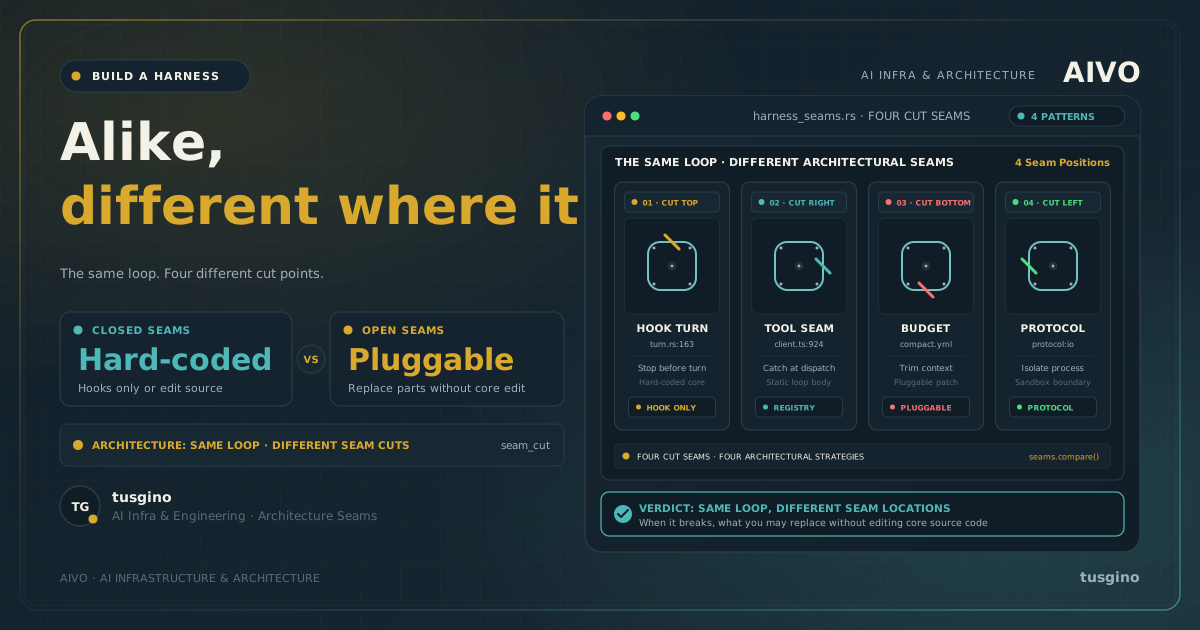
The same loop, different seams
Every harness has a log, a tool registry, a context budget and a permission layer. They differ in which of those you may replace — I read four to answer.
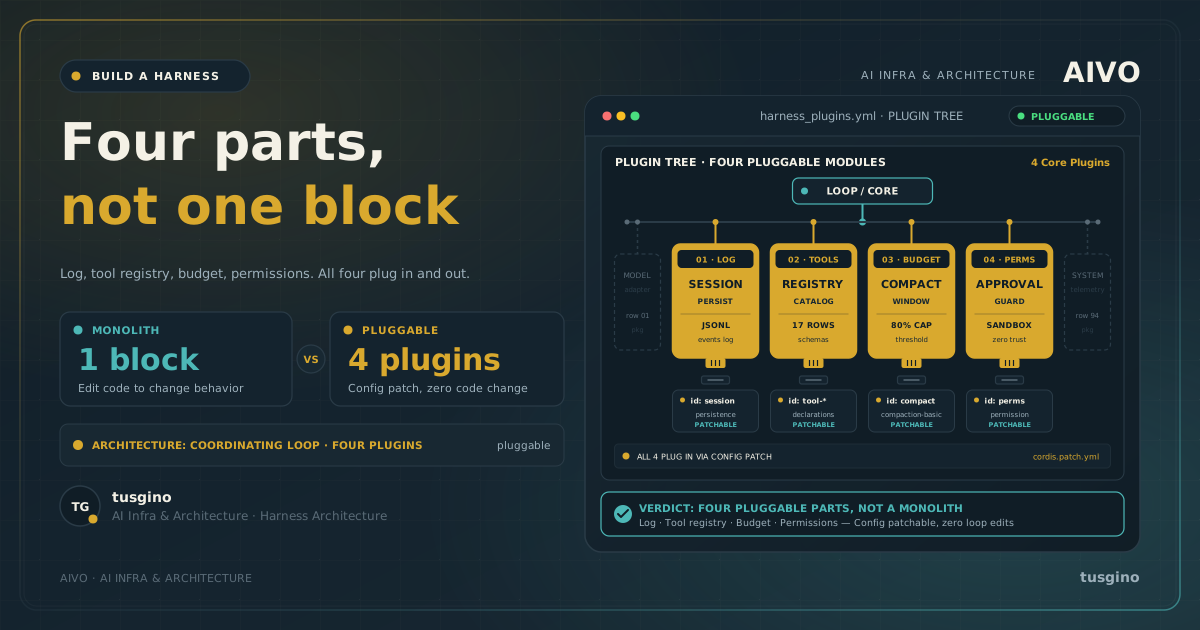
Where a harness begins
The loop is only a coordinator. Four parts turn it into a harness: a durable log, a tool registry, a context budget, and a permission layer, all four pluggable.
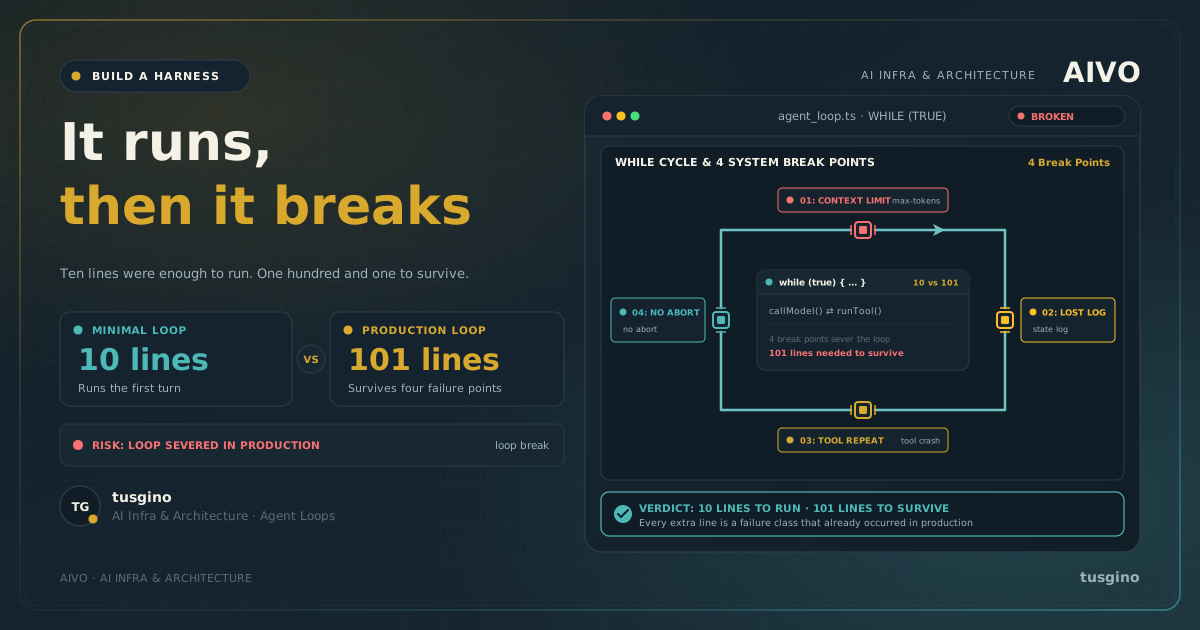
The while loop works, until it doesn't
An agent loop runs in ten lines. The production version of that same loop is 101 lines, and every extra line marks a place it used to break. Here are the four.